
This post may contain affiliate links, which means I may earn a small commission if you make a purchase or sign up through any of the links on this website, at no extra cost to you. View disclaimer for more information.
I studied abroad in Rome when I was 20 and it is the trip that changed everything. Not in a neat, tidy way, in the way that involves getting lost in a neighbourhood you didn’t mean to find, eating at a trattoria so small it had no name on the door, and realising that the version of yourself that exists when you are somewhere completely new is a version worth getting to know.
I have been living abroad in Southeast Asia for years now, traveling in and out of Europe regularly, and talking to study abroad students who come through the cities I cover on this blog. The question I get most often isn’t “should I study abroad in Europe,” almost everyone already knows the answer to that is yes, it’s “which city should I study abroad in.”
This guide answers that question. It’s not just a list of the most famous European cities. It goes into what each city is actually like to live in as a student, what type of person genuinely thrives there, roughly what it costs to live there for a semester, and what you should be looking for (or not looking for) before you commit.
Before you dive in: once you’ve chosen your city, the study abroad essentials guide and the complete study abroad packing list cover everything you need to bring and prepare before you leave.
This post is all about the best places to study abroad in Europe.

Italy is the most popular study abroad destination in Europe for a reason. The art, the architecture, the food, the history on every corner, it offers a density of experience that’s hard to find anywhere else. Three cities dominate the study abroad conversation here and they suit very different types of students.
Roughly $1,200 to $1,600 a month for a student. Rome was my city and it’s an obvious choice. It earns every cliché thrown at it and there is genuinely no city in Europe where the history is more physically present. The Colosseum is at the end of a street, the Pantheon is in the middle of a neighbourhood, and you walk past things daily that most people see once in a lifetime. For students studying art history, architecture, humanities, or Italian, it is essentially a living classroom. The city is enormous and a little chaotic, which is part of what makes a semester there so formative. You figure things out. You learn to navigate the metro, find the neighbourhood bars where locals eat rather than tourists, and do day trips on weekends to places like the Amalfi Coast or Cinque Terre.
For study abroad specifically, Rome suits students who are excited about immersion over comfort. The city is not the easiest to navigate when you first arrive, the metro is limited, the traffic is dense, and the bureaucracy of everyday life can be frustrating, but that friction is also part of what makes a semester there so formative. You figure things out. You ask strangers for directions. You get very good at pointing at menus.
Rome has a huge international student presence, particularly through American university programs, so you will have community immediately. The social life is built around aperitivo hours, late dinners, and weekend trips!
Who Rome is for:

Roughly $1,100 to $1,500 a month for a student. Florence is smaller than Rome, more manageable, and beautiful in a way that is almost unreasonably concentrated. It is considered the birth place of the Renaissance and was once the center of medieval European trade and finance. The Uffizi Gallery, the Ponte Vecchio, the Duomo, the Boboli Gardens: all within reach of each other and all genuinely, repeatedly jaw-dropping even once you have seen them many times.
Art and architecture students in particular find Florence almost too good to be real. The city is essentially a living classroom. Design students, fashion students, and anyone studying Italian Renaissance history will be in their element here in a way that is hard to replicate at any other study abroad location in Europe.
The student social scene is active but more contained than Rome or Barcelona. Florence is a city that rewards evening walks and long dinners more than late nights out. If your version of a great semester abroad involves gelato after class, wandering through markets on weekends, and actually doing the work you came to do, Florence tends to deliver that experience more reliably than its larger Italian neighbours. Cinque Terre is a popular day trip, and Florence is just a 1.5-hour train ride away. If you’re going to be based in Florence, read the Cinque Terre day trip guide before the end of your first month.
Who Florence is for
Roughly $1,000 to $1,400 a month for a student. Bologna is the study abroad city that people who have studied abroad recommend and that first-timers often overlook. It is home to the oldest university in Europe, has one of the most active student populations on the continent, and is considered by many Italians to be the best food city in the country, which is saying something significant.
The atmosphere is genuinely academic in a way that Rome and Florence are not quite. The city takes its university seriously. The arcaded streets (there are 40 kilometres of covered walkways throughout the city), the aperitivo culture, the red medieval towers, Bologna has a character that feels less like a tourist destination and more like a place where people actually live well. That is a meaningful distinction when you are spending a semester somewhere.
If you want to be in Italy without being in the version of Italy that has been packaged for visitors, Bologna is the answer.
Who Bologna is for

Spain consistently ranks among the top study abroad destinations in Europe for American students, and the reasons are practical as well as cultural: Spanish language skills are broadly useful, the cost of living is lower than France or the UK, the weather is excellent, and the social culture suits student life well.
Roughly $1,100 to $1,500 a month for a student. Barcelona has been ranked one of the top best cities to study abroad in Europe and continues to be a popular destination for students looking to study abroad in Europe! A study abroad experience here tends to be intense, social, and visually overwhelming in the best way. Gaudi’s architecture alone gives the city a surreal quality that does not wear off. Add the beach, the Gothic Quarter, the food markets, the nightlife, and the general energy of a city that seems to be permanently mid-celebration, Barcelona is hard to have a bad semester in.
It is also one of the most popular study abroad destinations in Europe, which means the international student community is large and well-established. If you are nervous about moving somewhere new, Barcelona has enough scaffolding, English is widely spoken in the student and tourist districts, the metro is easy, the programs are well-run, that you can find your footing quickly.
The honest note: because it is so popular, Barcelona can feel like a bubble. You will meet other international students easily. Actually integrating with Spanish (or Catalan) culture takes more deliberate effort than in smaller cities. Worth knowing going in.
Who Barcelona is for
Roughly $900 to $1,200 a month for a student. Seville is where you go when you want to learn Spanish properly and actually live inside Spanish culture rather than alongside it. It is a smaller, slower, more traditional city than Barcelona or Madrid, which is either the point or a drawback depending on who you are. The summers are extremely hot (often above 40C in July and August), but spring and autumn semesters are beautiful.
The tapas culture here is the best in Spain. Flamenco is not a tourist performance but a genuine part of the city’s cultural fabric. The architecture of the old city, the Real Alcazar, the Cathedral, the Barrio Santa Cruz, is some of the most impressive in Europe. Students who choose Seville tend to leave with better Spanish than those who went to Barcelona, partly because English is less of a fallback.
Who Seville is for

Roughly $1,100 to $1,500 a month for a student. Madrid is the capital of Spain and is known for its blend of modern and historical culture. It’s a proper world city with world-class museums (the Prado, the Reina Sofia), a thriving arts and music scene, and a nightlife culture that runs later than almost anywhere else in Europe. Dinner before 9pm is genuinely unusual. Clubs close around dawn. The city runs on a different clock to the rest of the world and once you adjust to it, it is hard to go back.
Madrid suits students who want urban energy and cultural weight in equal measure. It is less immediately “pretty” than Seville or Barcelona but it has more depth, the kind of city that reveals itself slowly and rewards students who spend a full semester rather than a summer program.
Who Madrid is for

France has a reputation for being challenging for non-French-speaking students, and it’s not entirely undeserved. But for students who lean into that, France offers one of the most rewarding study abroad experiences in Europe.
Roughly $1,600 to $2,200 a month for a student. Paris is the most aspirational study abroad city in Europe. The art, the food, the architecture, the fashion, the sense that you are living inside something significant, a semester in Paris tends to be the experience students describe in the most cinematic terms. That reputation is largely earned.
It is also expensive, can feel unwelcoming if you do not speak French, and is crowded in ways that can be exhausting. Students who thrive in Paris tend to be those who come with some French language, a genuine interest in French culture rather than just the aesthetic of it, and the independence to navigate a large and complex city without a lot of hand-holding.
The arts and fashion programs here are genuinely world-class. Gastronomy students, film students, literature students, and fashion students will find Paris hard to beat. For everyone else, the question is whether the experience is worth the cost and adjustment period.
Who Paris is for
Roughly $1,100 to $1,500 a month for a student. Lyon is France’s second city in culinary reputation and does not get nearly enough attention in study abroad conversations. It has two rivers, a UNESCO-listed old city, one of the best food scenes in Europe (the traboules, hidden passageways through Renaissance buildings, are used by locals daily and are extraordinary), and a student population that is large enough to have community but not so large that you feel anonymous.
For students who want France without the Paris price tag or the Paris attitude, Lyon is the answer. The cost of living is lower, the locals are warmer toward non-fluent French speakers, and the city has a rhythm that suits student life, busy enough to always have something to do, slow enough to actually study.
Who Lyon is for
Roughly $900 to $1,300 a month for a student. Montpellier is a university city in the south of France with a student population that makes up roughly a third of the entire city. It is young, affordable, close to the Mediterranean coast, and has a mix of French and Mediterranean culture that feels lighter and more relaxed than Paris or Lyon. It also has one of the oldest medical schools in the world, which attracts a specific type of academically serious student.
For students who want France with beaches within reach, a genuinely young city atmosphere, and a more affordable base for exploring southern Europe, Montpellier is consistently underrated.
Who Montpellier is for

The UK removes the language barrier for English-speaking students and offers some of the most academically prestigious study abroad options in the world. The trade-off is cost, particularly in London.
Roughly $1,800 to $2,500 a month for a student. If you’ve never traveled outside your home country, choosing London as your study abroad destination may be a good call. There is no language barrier, making the city easy to navigate. London is a melting pot of lots of different cultures, nationalities and languages making it a very special study abroad city in Europe.
It’s truly one of the most international cities in the world and a semester here is less like going abroad and more like moving temporarily to a city that operates at a higher frequency than most places you have lived. The museums (the British Museum, the National Gallery, the Tate Modern, the V&A) are free and world-class.
The honest reality is that London is expensive. Accommodation costs are high, eating out adds up fast, and the city can feel alienating if you do not find community quickly. Students who thrive here are those who come with a plan, a neighbourhood to live in, a few things they specifically want to do, some existing connections or a strong program community to anchor to.
Who London is for
Roughly $1,300 to $1,700 a month for a student. Edinburgh is one of the most dramatic cities in Europe, a medieval Old Town built around a volcanic rock with a castle on top, a Georgian New Town below it, and the Scottish Highlands a short drive away. The city has a literary and intellectual tradition that runs deep (the Scottish Enlightenment was not a small thing) and an energy during the annual Festival season that is unlike anywhere else on the continent.
It is also significantly more affordable than London, more manageable in size, and has a student population large enough to make finding community easy. The weather is famously brutal, cold, wet, and windy for a substantial part of the year, and this filters for a certain type of student. Those who embrace it tend to find Edinburgh one of the most formative study abroad experiences in Europe.
Who Edinburgh is for
Roughly $1,100 to $1,500 a month for a student. Manchester has one of the largest student populations of any city in Europe and a cultural output, in music, art, sport, and politics, that far exceeds its geographical size. The music history alone (The Smiths, Oasis, Joy Division, the Hacienda) gives the city a mythology that draws a specific type of student. The Northern Quarter is one of the best independent culture neighbourhoods in the UK. And the cost of living is dramatically more manageable than London.
Students who want the UK experience without London prices, who are interested in arts and culture over finance and fashion, and who want to be part of a huge, diverse student community will find Manchester a genuinely excellent choice.
Who Manchester is for
Ireland removes the language barrier the same way the UK does, and it comes with a warmth and social culture that a lot of students find even easier to settle into.
Roughly $1,300 to $1,800 a month for a student. Dublin is one of the most immediately social study abroad cities in Europe. The Irish pub culture is not a tourist performance, it is a genuine social institution, the place where people of all ages go to talk, and the fact that there is no language barrier means you can actually be part of conversations rather than performing a version of integration. Trinity College is one of the most beautiful university campuses in Europe.
The literary history here is extraordinary, Beckett, Wilde, Joyce, Yeats, Heaney, and the city takes it seriously in a way that is not just museum-ified. The Irish diaspora means a familiar warmth toward American students in particular.
Who Dublin is for
The Netherlands is one of the most welcoming countries in Europe for international students. English is widely spoken, most Dutch people under 50 are fluent, and the university system has a strong international reputation.

Roughly $1,400 to $1,900 a month for a student. Amsterdam is one of the most visually distinctive cities in the world and living there for a semester, cycling between canal houses, visiting the Rijksmuseum on a weekday afternoon, navigating a city that feels like it was designed specifically for slow, exploratory movement, is a particular kind of experience. It is also a very liberal city with a well-developed infrastructure for international students.
The honest context: Amsterdam is expensive for the Netherlands, and student housing is notoriously difficult to secure. Book accommodation as early as possible if you are going here, the housing market is genuinely tight and can cause real stress for students who leave it late.
Who Amsterdam is for
Roughly $1,000 to $1,400 a month for a student. Maastricht is a small city in the south of the Netherlands, right on the Belgian border, and it is home to Maastricht University, one of the most internationally oriented universities in Europe and famous for its problem-based learning approach. The city has more international students per capita than almost anywhere else in Europe, which creates an unusual atmosphere: deeply cosmopolitan in a setting that is quiet, medieval, and very beautiful.
For students who want serious academics in a compact, manageable European city with easy access to Belgium, Germany, and Luxembourg, Maastricht is a genuinely underrated option.
Who Maastricht is for
Belgium doesn’t market itself as a study abroad destination the way France or Spain do, but as the headquarters of the EU, it offers a level of international access that’s hard to find anywhere else on the continent. It’s small, central, and genuinely useful as a base for students who want constant weekend travel built into their semester.
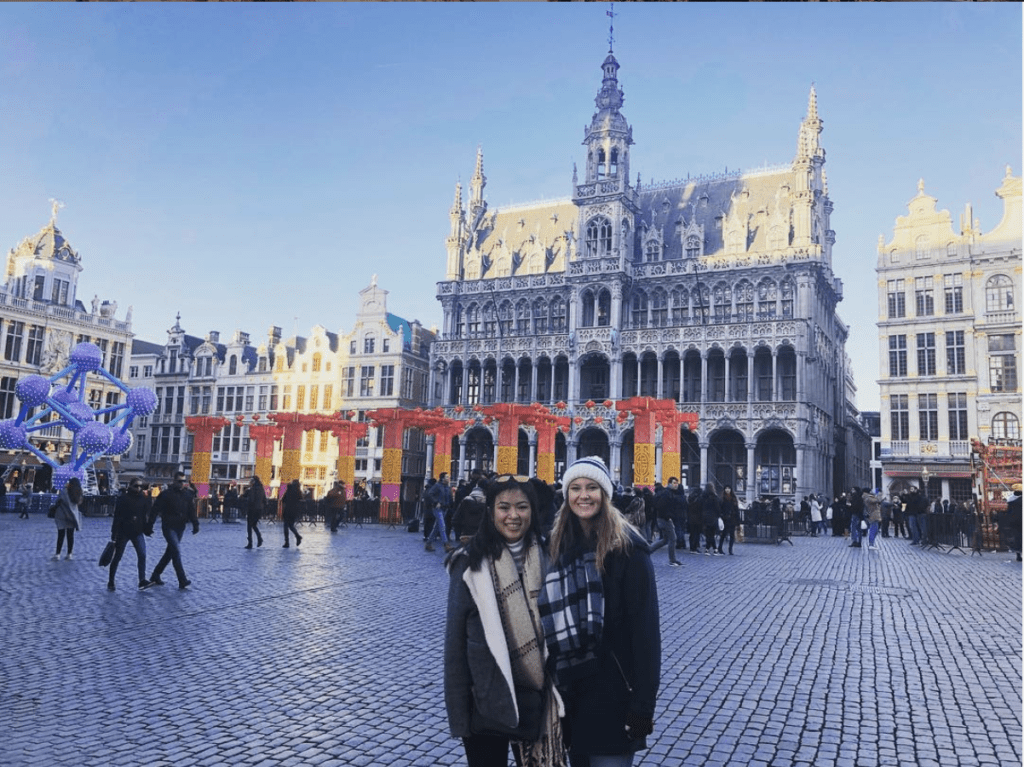
Roughly $1,200 to $1,600 a month for a student. Brussels doesn’t get the romantic reputation of Paris or the design reputation of Copenhagen, and that’s exactly why it’s underrated. As the de facto capital of the EU, it’s genuinely one of the most international cities in Europe, students here end up with classmates from a dozen countries without even trying. The Grand Place is one of the most ornate squares in Europe, and the city’s art nouveau architecture and comic strip murals give it a personality that’s easy to overlook from the outside.
Brussels is also one of the best-located cities on this list for weekend travel, Paris, Amsterdam, Cologne, and Bruges are all under two hours away by train. And yes, the food reputation, waffles, chocolate, beer, fries, is entirely earned.
Who Brussels is for
Germany has excellent universities, a low cost of living by Western European standards, and two cities that offer dramatically different study abroad experiences.

Roughly $1,000 to $1,400 a month for a student. Berlin is unlike any other city in Europe. The history, the wall, the division, the reunification, is physically present in the city in a way that goes well beyond museums and monuments. And the creative culture that grew in the spaces left by that history is still very much alive: Berlin has one of the most significant arts, music, and club scenes in the world.
It is also cheap by European capital standards, politically engaged, and very welcoming of international students and creative people. Students in arts, political science, history, and architecture in particular find Berlin genuinely transformative. It is not an easy city to describe because it resists clean descriptions, it is better experienced than explained.
Who Berlin is for
Roughly $1,300 to $1,800 a month for a student. Munich is the other Germany entirely. Clean, ordered, expensive by German standards, and with a connection to outdoor life, the Alps are within 90 minutes, that makes it unusually appealing for students who want urban and natural access in the same semester. The beer halls are real and worth experiencing; the Oktoberfest crowds are real and worth timing your arrival around if you want accommodation to be reasonable.
Engineering, technology, and business students in particular find Munich well-matched to their interests, the city has a strong technical university tradition and significant industry connections.
Who Munich is for
Austria is Europe’s classical music and high culture capital, and it doesn’t get nearly the study abroad attention that Germany or France do. It’s stable, safe, and centrally located, an easy country to build a semester around if academic and cultural depth matter more to you than nightlife.
Roughly $1,200 to $1,600 a month for a student. Vienna is the most civilised city on this list in a very specific way, it has the coffee house culture, the concert halls, the opera, the museums, the grand boulevards, and it takes all of it seriously in a way that is not stuffy but deeply lived-in. Music students in particular find it almost unreasonably good.
The city consistently ranks among the most livable in the world, and the infrastructure shows it, an excellent metro system, genuinely clean streets, and a level of order that makes daily student life easy to manage. It’s also centrally located for weekend trips into Central and Eastern Europe.
Who Vienna is for
Switzerland is expensive by any measure, but it consistently ranks among the safest, cleanest, and most efficiently run countries in the world, and for students in finance or business specifically, it’s hard to beat. Its multilingual culture also means students land more easily than the reputation for being closed off would suggest.

Roughly $2,000 to $2,700 a month for a student, and one of the most expensive cities on this entire list which is worth saying upfront so it doesn’t catch anyone off guard. What that cost buys you is access to exceptional public transport, a super clean and safe city, and the Alps within an hour for weekend skiing or hiking. Lake Zurich sits right at the edge of downtown, which makes summer weekends feel more like a holiday than a study semester.
Switzerland’s multilingual culture, German, French, Italian, and English all in regular use depending on the region, makes Zurich specifically an easier landing than students expect.
Who Zurich is for
Denmark, and Scandinavia more broadly, isn’t the first place most students think of for study abroad, but it consistently tops quality-of-life rankings for a reason. It’s expensive, but it delivers on safety, design, and a genuinely healthy pace of life that a lot of students don’t realize they’re looking for until they experience it.
Roughly $1,700 to $2,300 a month for a student. Copenhagen consistently ranks among the most livable cities in the world, and a semester there makes it obvious why. The bike culture isn’t a novelty, it’s how the entire city actually moves, and the design sensibility, clean lines, function over decoration, shows up in everything from the architecture to the furniture in your student housing. Nyhavn’s colorful harbor houses are the postcard shot, but the real appeal is quieter: hygge, the Danish concept of cozy contentment, is a genuine cultural value here, not a marketing term.
The honest note: Copenhagen is expensive, among the priciest cities on this list. Malmö, Sweden is a short train ride across the bridge for an easy weekend trip to a second country.
Who Copenhagen is for
Norway is the most nature-forward country on this list by a wide margin. It’s expensive and the winters are long, but for students who want the outdoors built into their actual semester rather than treated as a weekend afterthought, nowhere else on this list comes close.
Roughly $1,800 to $2,400 a month for a student. Oslo is the pick for students who want nature to be part of the actual curriculum of studying abroad, not just a weekend add-on. Fjords, forests, and hiking trails start at the edge of the city, and it’s genuinely normal for a semester here to include cross-country skiing in winter and swimming in a fjord in summer. The city itself is compact, clean, and safe in a way that makes it easy for first-time international students to settle in fast.
The honest note: Oslo is expensive, arguably the most expensive city on this list, and the winters are long and dark. What you get in exchange is one of the best work-life balance cultures in the world.
Who Oslo is for

Portugal is one of the most underrated study abroad destinations in Europe. It’s warm, affordable, English-friendly, genuinely beautiful, and has a cultural melancholy, the concept of saudade, a longing for something not quite present, that gives the country a particular emotional depth.
Roughly $900 to $1,300 a month for a student. Lisbon has become one of the most talked-about cities in Europe over the last decade, and a study abroad semester here catches it at an interesting moment: still affordable, increasingly international, and with a creative and startup energy that has layered onto its older fado and azulejo tile culture. The hills, the trams, the miradouros (viewpoints) above the city at sunset, Lisbon is one of the most visually distinctive cities in the world.
The Atlantic coast is accessible for surf day trips. The city has a strong nightlife scene that runs late without the aggression of some other European capitals. And the Portuguese are genuinely warm toward visitors in a way that makes it easy to find a foothold in the city quickly.
Who Lisbon is for
Roughly $800 to $1,100 a month for a student. Porto is smaller and more intimate than Lisbon, with a rougher-around-the-edges beauty, the crumbling azulejo facades, the Douro River, the port wine cellars across the water in Vila Nova de Gaia. It is one of the most photogenic cities in Europe and feels genuinely like a city that tourists have discovered but has not yet been fully transformed by that discovery.
Students who want a quieter, more concentrated experience in Portugal, who are interested in the arts and architecture, or who want a base in the north of the country for exploring the Douro Valley and rural Portugal, will find Porto quietly revelatory.
Who Porto is for

Roughly $700 to $1,000 a month for a student, the most affordable city on this entire list by a real margin. Prague comes up constantly in study abroad research for a reason: a huge range of English-taught courses, a genuinely stunning medieval old town (the astronomical clock, Charles Bridge, Prague Castle looming over the whole city), and a student nightlife scene that is active without the price tag of Western Europe. Beer is famously, almost absurdly cheap, sometimes less than bottled water, and that single fact says a lot about the overall cost of living here.
I have not studied here myself, so I will not pretend to give you the same lived-in detail as Rome, but every serious comparison of affordable, English-friendly European study abroad cities puts Prague near the top, and the cost alone makes it worth a look if budget is your main constraint. It is also genuinely central, a short train or budget flight from Vienna, Berlin, Budapest, and Krakow, which matters if weekend travel is a priority for you.
Who Prague is for:
Poland is one of the most affordable and historically significant countries in Europe, and Krakow in particular has become a serious study abroad destination for students who want Central European history without Western European prices. English-taught programs are increasingly common here too.
Roughly $700 to $1,000 a month for a student, one of the most affordable cities on this entire list. Krakow is one of the most historically significant cities in Europe, the medieval old town and Wawel Castle survived World War II largely intact, which makes the city center feel genuinely medieval rather than reconstructed. It’s also home to one of Europe’s oldest universities, and the surrounding student population keeps the city young and active despite its old-world look.
The proximity to Auschwitz-Birkenau makes this a place where history isn’t abstract, many programs build a visit into the semester, and it tends to be one of the most formative experiences students have abroad.
Who Krakow is for
Turkey sits at the literal crossroads of Europe and Asia, and that in-between identity is exactly what makes it worth considering for students who want their semester abroad to feel genuinely different rather than another version of Western Europe. It asks more independence of students than most of the countries on this list, and rewards it.
Roughly $700 to $1,000 a month for a student. Istanbul is the only city on this list genuinely split between two continents, and that in-between quality defines everything about studying here. The Hagia Sophia and the Blue Mosque sit within walking distance of each other, the Grand Bazaar is still a functioning market and not just a tourist attraction, and the Bosphorus strait gives the whole city a sense of scale most European capitals don’t have.
Istanbul asks a bit more independence and cultural flexibility of students than most other cities on this list, it’s a genuinely different cultural context than Western or Central Europe, worth researching your specific program’s support system before committing.
Who Istanbul is for
The most common mistake students make when choosing a study abroad city is optimising for reputation rather than fit. Everyone knows Paris and Barcelona. Fewer people have heard of Bologna, Maastricht, or Prague. But fit matters more than name recognition when you’re going to spend four months somewhere.
A few honest questions to ask yourself before deciding:
One thing that matters more than any of the above: weekend travel. Every city in this guide is within a few hours of other remarkable places by train or budget flight. Part of the study abroad experience is using wherever you’re based as a springboard for the continent. Build that into your decision, where do you want to be able to go easily on a Friday afternoon?
Once you’ve chosen your city, the packing side of study abroad is easier than most people expect, but there are a few things that consistently catch students off guard on their first international trip.
The complete study abroad packing list covers everything you need for a semester in Europe from personal experience, including the things nobody tells you to bring. The study abroad essentials guide goes deeper on the items that actually matter once you get there.
Go. Even if you’re scared, nervous, or all of the above. It’s one of the best things I did in college and is 110% worth all the adventure you’ll experience at the end.
If you’re still looking for other places to study abroad, check out my post on the best places to study abroad in Asia or explore the rest of my study abroad posts here.
This post was all about the best places to study abroad in Europe.
Check out some of my favorite tools and companies I actually use when I travel.
Need a Bank Account for Life Abroad? Wise is the best option for travelers, study abroad students and expats. I use it as my everyday checking account since it lets me hold and spend in multiple currencies without getting hit with a bad exchange rate every time I cross a border.
Want to Travel for Free & Skip the Foreign Transaction Fees? I put my spending on my Chase Sapphire Preferred card and let the points cover flights and hotels I'd otherwise be paying for out of pocket. I've been able to use the points I earn on this card to pay for flights, hotels and meals all around the world!
Please Don't Forget Travel Insurance! Travel insurance protects you against illness, injury, theft, and cancellations. I never go on a trip without it. My two favorites are:
Need a Flight? I personally love using Google Flights to track prices and compare dates before I commit, the flexible date view alone has saved me a lot of money. Skyscanner is another great search engine to find cheap flights because it searches sites and airlines around the globe, so you know no cheap deal is being left on the table.
Getting Around Southeast Asia? Book your buses, trains, and ferries with 12Go Asia. One search shows you every route and price, so you're not digging through ten different local booking sites.
Need a Place to Stay? Book your hotel with Expedia, where I start looking, especially when I want to bundle flights and stays together. Hotels.com is my backup when I want to compare prices or I'm chasing their rewards program for a free night.
On a Tighter Budget? Hostelworld is where I go for hostels. It has the largest inventory out there, and you can search for dorm beds or private rooms depending on what you're after!
Want a Free Way to Travel? Try TrustedHousesitters! You look after someone's home and pets while they're away, and in exchange you get free accommodation (minus the subscription fee). It's a great option if you're traveling long term and want to cut costs. I personally use this as a host and a sitter, and it's truly great!
Need Inspiration or Just Want to See What's Out There? Go Guides is a solid resource for destination guides, must-see landmarks, local markets, best beaches, and things to do, browsable by place or by theme. It's a good stop whether you already know where you're headed or you're still looking for your next destination.
Check out my full packing gear guide for everything I bring on international trips, or browse my favorite travel finds on Amazon for quick links to it all.
Check out my full resource page for every company I use when I travel. I list them all in one place so you can go from planning to booked without digging through old blog posts!

Hey there, I'm Angelique!
I'm a Filipina-American, Chicago native living abroad and running my online design agency from Chiang Mai, Thailand. Over a decade of traveling in, and yes, I still pinch myself. With family split between the US, UK, and SE Asia, travel has always been part of my story. This blog is where I share the honest side of living and traveling abroad, the places I explore, my best study abroad tips from personal experience, and the little hacks that make this life actually work. Glad you're here, friend!
Studying abroad soon?
everything to sort before you go, in one printable page.


Grab the printable study abroad checklist covering the paperwork, money, and packing stuff that's easy to forget until you're already there wishing you'd sorted it!